This is Week 1 of 4 on the Effects Gratitude and Emotional Wellness have on the Mind, Body and Spirit. Here we focus on the mindful impact.

Part I: The Science
Part II: Change and Impact
Part III: Call to Action, Change Your Life
PART I: The Neuroscience of Gratitude — Rewiring Your Brain for Wellness
You may have experienced receiving several compliments from one or more people and then another casts a criticism. It’s the criticism that lands hardest and stimulates reaction. Your brain is wired to be defensive, and it starts with a small, almond-shaped region called the amygdala.
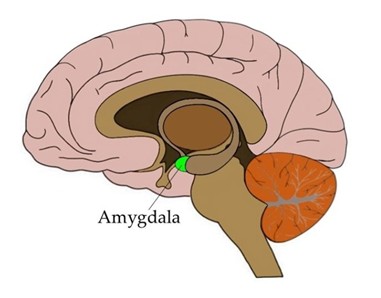
The amygdala functions as your brain’s threat detection system. When you encounter potential danger—whether it’s a legitimate threat or just an awkward social interaction—your amygdala activates before your conscious mind even registers what’s happening. This defensive response serves multiple psychological purposes: it protects you from physical harm, guards your ego from emotional wounds, helps you avoid social rejection, and keeps you vigilant against repeating past mistakes. I akin it to a nuclear device, something so small carries so much power. But much like nuclear fusion, when controlled, can provide so much useful energy.

The problem isn’t that you’re defensive—that’s actually adaptive. The problem is that your amygdala can’t always distinguish between genuine threats and minor inconveniences. A critical email triggers the same neural alarm as a physical danger. Your boss’s tone in a meeting activates the same fear circuitry as actual rejection. This constant defensive posture is exhausting and works against your overall wellness.
But here’s the good news—gratitude can actually recalibrate this threat detection system. I’m not talking about vague “think positive” advice. I don’t get into let’s just think positive and all will adjust accordingly. I need to know the science behind the adjustment and be able to measure the outcome once the change is implemented. You’re reading this because you want value to come from the time you take to engage in this read. You think critically and clearly. I’m talking about measurable changes in your brain structure and function, backed by neuroscience research.
What Happens in Your Brain During Gratitude
When you experience genuine gratitude, multiple brain regions activate in what researchers call the “gratitude network.” A 2015 study published in Frontiers in Psychology by Glenn Fox and colleagues at the University of Southern California used fMRI scans to watch what happens during gratitude experiences. They found that gratitude activated the anterior cingulate cortex and medial prefrontal cortex—brain regions handling moral cognition, reward processing, emotional regulation, and social connection.

Think of the medial prefrontal cortex as your brain’s value calculator. When gratitude activates this area, you’re training your brain to assign higher value to positive experiences. The Fox study found that people who are generally more grateful showed greater neural sensitivity in this region, meaning they’re more attentive to positive moments in their lives.
Why Your Brain Defaults to Negativity (And Defensiveness)
Your brain has what scientists call a “negativity bias”, which is the tendency to focus on threats and problems more than positive experiences. What is up with that? I experience that and I find myself working to regulate my thinking away from the negative. For me, staying on that adverse focus, sucks out my good energy and has me feeling bitter and annoyed. Like a charred bark from a left over fire. Don’t touch it, it’s ugly, it’ll burn or leave black char streaks on you. I don’t wanna spread that around.

Research published in Psychological Bulletin by Vaish, Grossmann, and Woodward (2008) found that adults display this bias across psychological situations, showing a propensity to attend to, learn from, and use negative information far more than positive information.
Here is the intriguing part, at a higher cognitive level, negative stimuli are hypothesized to carry greater informational value than positive stimuli, and to thus require greater attention and cognitive processing (see Peeters & Czapinski, 1990).

Accordingly, adults spend more time looking at negative than at positive stimuli, perceive negative stimuli to be more complex than positive ones, and form more complex cognitive representations of negative than of positive stimuli (e.g., Ducette & Soucar, 1974; Fiske, 1980; H. Miller & Bieri, 1965). In essence the attention to negative inputs engages our brains to be analytical and invite greater processing. This is a positive aspect of greater attention to negativity. It makes sense. For example I had an experience that you may relate to. A little while back, when freeway driving I came up on several people in the left or passing lane as I approached, they moved to the right to let the faster traffic, me, on by. I appreciate that consideration and give a thankful wave, if possible. I go on and think nothing more than that was a considerate move that person made. Then there’s the old bird that wanted to hang onto the lane regardless of what was behind her. As the lanes expanded, I was able to move to the furthest left and pass, as I did so, she was flipping me HER cherished old bird. I developed multiple thoughts on her action and even carried that with me for a while. Processing, speculating, re-processing. It didn’t drag into my day but I am able to recognize how I processed more of the bird’s bird moreover than someone just sliding right to allow faster traffic to flow on by.

So, what’s actually going on in those moments is our amygdala uses approximately two-thirds of its neurons to detect and process negative information, then quickly stores it into long-term memory. Our defensive responses serve multiple protective functions:
Physical Protection: The amygdala activates fight-or-flight to keep us safe
Ego Defense: Negativity bias guards against threats to our self-image
Social Safeguarding: Our brain prioritizes negative social information to avoid rejection

Learning from Mistakes: Negative experiences encode more strongly
Resource Conservation: Caution prevents wasting energy on harmful situations
A 2010 study in Social Cognitive and Affective Neuroscience confirmed that negativity bias provides adaptive advantage—it’s more critical to avoid harmful stimuli than pursue positive ones. Self-protection override. Brain imaging shows negative stimuli activates the amygdala more quickly and intensely than positive stimuli. We spend cognitive time assessing negative stimuli to determine safety, next course of action and, much like my car bird experience, contemplate the why of occurrences.

Our brain is Velcro for negative experiences and Teflon for positive ones. This is where gratitude practice comes in—not to ignore problems or eliminate protective instincts, but to counterbalance our brain’s default setting so we’re not stuck in constant defensive mode. Where we have a tendency to dump our indignance onto others like giving them a wet wool blanket when they’re cold.

PART II: Change and Impact
Our Brain Can Actually Change
Thanks to neuroplasticity—the brain’s ability to reorganize itself—we can recalibrate those defensive pathways. When we practice gratitude consistently, we’re physically changing your brain structure.
A fascinating study published by researchers at UC Berkeley and Indiana University tracked people seeking mental health counseling. One group wrote gratitude letters for three weeks, another wrote about negative experiences, and a third group just received counseling. Three months later, brain scans showed that those who wrote gratitude letters had greater activation in the medial prefrontal cortex when experiencing gratitude. The practice created lasting brain changes visible months after the intervention ended.
Real Mental Health Benefits
Can gratitude help with serious challenges? The the same study used nearly 300 adults with clinically low mental health. Those who wrote gratitude letters reported significantly better mental health four weeks and 12 weeks after writing ended.
The key finding: it was the lack of negative emotion words—not abundance of positive words—that explained the improvement. Gratitude shifted attention away from rumination, giving the amygdala a break from constant threat detection.
A comprehensive meta-analysis of 64 randomized trials with 6,700+ participants found gratitude interventions led to 6.86% higher life satisfaction, 5.8% better mental health, and 7.76% fewer anxiety symptoms.
Another meta-analysis of 26,427 participants found individuals with more gratitude have lower depression levels (correlation of -0.39).
For balance: a 2020 meta-analysis found gratitude interventions had small but real effects (effect size of -0.29). Gratitude isn’t magic—it’s one valuable tool.
Better Sleep Through Gratitude
If you’re lying awake replaying awkward conversations, your amygdala is in overdrive, scanning for threats even when you’re trying to rest. A 2009 study published in the Journal of Psychosomatic Research by Wood, Joseph, Lloyd, and Atkins examined 401 participants (40% with clinically impaired sleep) and found that gratitude predicted better sleep quality, longer sleep duration, less time to fall asleep, and less daytime dysfunction.
I can absolutely attest to this being true. When I am feeling stressed and get into the rumination process, I simply cannot sleep. However, when my mind treadmill begins, I move to turn my thoughts into gratitude or prayer. This was something I just thought I’d try and it worked. I was able to settle my thoughts and achieve a more serene state. I began and continue to pray for those around me that need uplift, I pray for family that needs physical and spiritual protections, I pray for friends, I pray thanks for the good things I’m provided. There is always something I am thankful for, even if it’s the smile I received from the person working the register that day or the energy I was provided to complete my workout session. I can either ruminate or “gratitudeate”.

What’s going on are pre-sleep cognitions. Grateful people have fewer worrying thoughts and more positive thoughts when falling asleep, which calms the amygdala’s threat detection system. Gratitude settles the active amygdala, bad barking dog, into something more docile, good sleeping do This was the first study showing a positive trait related to good sleep quality above the effect of other personality traits, including neuroticism.
PART III: Call to Action, Change Your Life
Four Evidence-Based Practices
- Gratitude Journaling
Write 3-5 specific things you’re grateful for, 2-4 times per week. Be specific: “I’m grateful my neighbor checked in when I was sick” beats “I’m grateful for good neighbors.” Benefits appear with just once-weekly writing for three weeks.
- Gratitude Letters
Write a letter expressing genuine gratitude. Describe what they did, how it affected you, and why it matters. Only 23% of Berkeley study participants sent their letters, but everyone who wrote them benefited—the act of writing itself creates brain changes.
- Pre-Sleep Gratitude
Spend 5-10 minutes before bed journaling or mentally reviewing three good things from your day. This calms your amygdala’s nighttime threat scanning and improves sleep quality. For me, even when I’m lying in bed, I pick out the good points I came upon from my day and spend time there. It is calming.
- Gratitude Meditation
A 2017 study published in Scientific Reports found heart rate was significantly lower during gratitude meditation than resentment-focused thinking. Try 5-10 minutes in quiet reflection.
The Timeline: Be Patient
Benefits don’t appear overnight. The Berkeley study showed no differences after one week, but gratitude groups showed better mental health after four weeks, with effects growing stronger at 12 weeks. Unlike most positive psychology interventions where benefits fade, gratitude effects build over time. Think strength training for your brain—consistent practice over weeks and months recalibrates neural pathways.
When Gratitude Feels Fake
Gratitude isn’t about pretending problems don’t exist. Research shows it works by shifting attention away from toxic emotions, not eliminating them. If you don’t feel grateful right now, start small: your lungs work, you have clean water, your bed was comfortable. You can hold both truths: “This is really hard AND I’m grateful my friend showed up.” Truthfully, there will be times you don’t feel grateful and life is just dumping on you like a hard rain. I’ve been at this point many times. Honestly, I know it can be tough but dig in and find something to be grateful for and stay this course, even when it’s dark. And, for sure, this practice will shine a light of calm and get you into a state of serenity and appreciation.
Your Next Step
Pick one practice. Do it consistently for seven days. Notice subtle shifts: faster sleep, one more positive observation, slightly different mental patterns. The neuroscience is clear: gratitude recalibrates your defensive brain systems. Brain regions for emotional regulation and reward show increased activity during gratitude, strengthening with practice.
Your amygdala’s defensive responses protect you, but constant threat-detection works against wellbeing. Gratitude creates balance by strengthening positive neural pathways while maintaining healthy caution. This isn’t forced positivity—it’s working with your brain’s plasticity to create balance.
Is It True or Some Neural Fabrication
Consider the negative thought in true context. For instance, if someone offended you, like my bird lady, am I actually the target? Did she just have a bad day and was dumping her load of garbage onto me? Do I need to personalize this? Truth may be, it was never about me. Consider also how your thoughts will lead you up the ladder of inference, each step being a conjecture of something that isn’t near the truth. If it’s around a specific person, ask yourself, did they really intend for that to come out or was it something they’re dealing with and I happened to be in their pathway? We can lay out some pretty unworthy testaments about occurrences that are far from truth. Not that the impact didn’t hit hard, like a baseball, but it wasn’t intended to be a wild pitch and the bruising will go away.
Get your gratitude on, walk in a brighter spirit. Keep in mind the more you act like it the more it becomes you. The psychology behind it is proven. Nothing starts out easy, at times, but with consistency, commitment and continuation (I just came up with those 3-C’s) you will change for the better.
Stay healthy and well in mind, body and spirit. God bless.
Next week: how these neural changes, deflecting negativity while promoting positivity, translate into physical health benefits including immune function, heart health, and inflammation.
Ready to start? Download our free “7-Day Gratitude Brain Reset” workbook with structured journaling prompts and tracking tools based on the neuroscience research. [Get your free workbook here]
Additional Reading: Books to Deepen Your Gratitude Practice
Want to dive deeper into the neuroscience and practice of gratitude? These research-backed books complement Week 1’s focus on rewiring your brain for wellness. Each offers unique insights into how gratitude transforms both brain and life.
“Thanks! How Practicing Gratitude Can Make You Happier” by Robert A. Emmons, PhD. Study showing that people who practice grateful thinking can increase their happiness “set-point” by as much as 25 percent
“Gratitude Works! A 21-Day Program for Creating Emotional Prosperity” by Robert A. Emmons, PhD. Emmons provides a step-by-step, 21-day guide for cultivating gratitude practices with concrete exercises you can implement immediately. The organic metaphor of “growing gratitude” makes the neuroscience accessible and actionable.
“Hardwiring Happiness: The New Brain Science of Contentment, Calm, and Confidence” by Rick Hanson, PhD This New York Times bestseller explains the neuroscience behind the negativity bias and provides his HEAL method (Have, Enrich, Absorb, Link) for literally rewiring your brain in minutes each day.
“The Gratitude Project: How the Science of Thankfulness Can Rewire Our Brains for Resilience, Optimism, and the Greater Good” edited by Jeremy Adam Smith, Kira M. Newman, Jason Marsh, and Dacher Keltner Explores gratitude’s deep roots in human psychology and its transformative impact.
“The Little Book of Gratitude: Create a Life of Happiness and Wellbeing by Giving Thanks” by Robert A. Emmons, PhD Features simple exercises, affirmations, and the science behind gratitude in an accessible, visually appealing format. Quick to read but packed with practical wisdom.
“Year of Gratitude Journal: 52 Weeks of Prompts and Exercises to Cultivate Positivity & Joy” by Keir Brady, LMFT A structured, year-long guided journal with weekly writing prompts. Perfect complement to the 7-Day Gratitude Brain Reset workbook for those ready to commit to long-term practice. Includes targeted strategies, off-the-page exercises, and encouraging quotes.
*Note: These are Amazon affiliate links. If you purchase through these links, MBS Synergy receives a small commission at no additional cost to you. This helps support our evidence-based wellness content and keeps our resources free for readers like you. It will be greatly appreciated and another point of gratitude.*
Let’s Talk About It
- What negativity patterns do you notice in your own thinking? Do you replay conversations looking for what went wrong? Fixate on criticism more than compliments? Understanding your patterns is the first step.
- Have you tried gratitude journaling before? What happened? Did you stick with it? What got in the way or what helped you succeed?
- Does knowing gratitude works by reducing negative thinking (not forcing positivity) change how you view the practice? Does it make it feel more authentic or doable?
- Which of the four practices feels most realistic for you to try this week? What would make it easier to follow through?
- How do you balance authentic acknowledgment of struggles with intentional gratitude? Can both exist together, or does it feel like choosing one or the other?
Share your thoughts in the comments—your real-world experiences often teach more than research studies.
Part 1 of our Gratitude & Emotional Wellness series. Next week: “How Gratitude Affects Your Physical Health”—exploring the connections between thankfulness and your immune system, heart health, and inflammation levels.